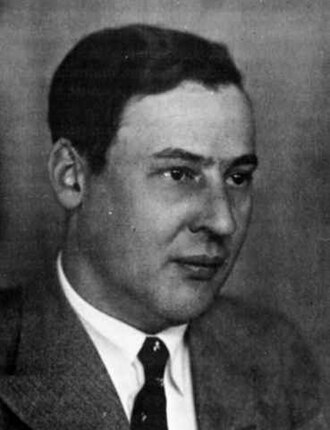
1. Sadi Carnot
Nicolas Léonard Sadi Carnot foi um jovem engenheiro militar francês que, aos 28 anos, publicou a sua única obra, «Reflexões sobre a Potência Motriz do Fogo» (1824). Incomodado pelo facto de as máquinas a vapor britânicas serem muito mais eficientes do que as francesas, Carnot abstraiu todos os detalhes mecânicos e descobriu que nenhum motor térmico pode produzir trabalho sem uma diferença de temperatura entre uma fonte quente e uma fonte fria. Morreu tragicamente aos 36 anos vítima de uma epidemia de cólera em Paris. Nicolas Léonard Sadi Carnot was a young French military engineer who, at age 28, published his only work, «Reflections on the Motive Power of Fire» (1824). Troubled that British steam engines were far more efficient than French ones, Carnot stripped away all mechanical details and discovered that no heat engine can produce work without a temperature difference between a hot source and a cold sink. He died tragically at age 36 during a cholera epidemic in Paris.
É universalmente reconhecido como o Pai da Termodinâmica. Criou o conceito de ciclo termodinâmico reversível (Ciclo de Carnot) e provou que a eficiência máxima de qualquer máquina térmica depende exclusivamente das temperaturas absolutas dos reservatórios (\(\eta_{\text{máx}} = 1 - T_C/T_H\)), lançando a semente direta da 2.ª Lei da Termodinâmica e mostrando porque as células (isotérmicas, \(T_C = T_H\)) não podem ser máquinas térmicas! Universally recognized as the Father of Thermodynamics. He created the concept of a reversible thermodynamic cycle (Carnot Cycle) and proved that the maximum efficiency of any heat engine depends solely on the absolute temperatures of its reservoirs (\(\eta_{\text{max}} = 1 - T_C/T_H\)), laying the foundation for the 2nd Law of Thermodynamics and showing why isothermal living cells (\(T_C = T_H\)) cannot act as heat engines!
O teorema de Carnot revolucionou a Revolução Industrial, o design de motores de automóveis, turbinas de aviões e centrais elétricas, definindo o limite físico inultrapassável da eficiência energética da civilização humana. Carnot's theorem revolutionized the Industrial Revolution, the design of automobile engines, jet turbines, and power plants, defining the ultimate physical limit of energy efficiency for human civilization.
Sadi Carnot tinha 28 anos, estava furioso porque os ingleses tinham motores a vapor melhores do que os franceses e decidiu escrever UM ÚNICO livro na vida — pago do próprio bolso! Quase ninguém leu o livro na altura, mas continha simplesmente o segredo de todo o Universo: «Não há almoços grátis térmicos! Se não tiveres um sítio frio para deitar fora parte do calor, o teu motor é apenas um aquecedor caro!» Como na época da cólera queimaram todos os pertences dele por higiene, quase todo o seu espólio desapareceu, mas aquele único livrinho chegou para fazer chorar engenheiros mecânicos há 200 anos! Sadi Carnot was 28, furious that the British had better steam engines than the French, and decided to write ONE SINGLE book in his life — self-published out of his own pocket! Almost nobody read it at the time, yet it held the secret of the Universe: «There are no thermal free lunches! Without a cold sink to dump waste heat, your engine is just an overpriced space heater!» Because his belongings were burned during the 1832 cholera outbreak, nearly all his papers vanished — but that one little book has kept mechanical engineers crying for 200 years!